English| EUR
Suggested for you
More currencies
Choose a language
Florence Airport operates a transparent fixed-fare system for taxis serving the city center, eliminating meter uncertainty for arriving passengers. Understanding the base rate, mandatory supplements, and accepted payment methods ensures you know exactly what you'll pay before leaving the terminal. The official taxi rank sits directly outside the arrivals hall, staffed around the clock.
Quick answer
The florence airport taxi cost is a fixed €28 fare from the terminal to any address within Florence's city center, as regulated by municipal ordinance. This base rate applies during standard daytime hours on weekdays. Mandatory supplements add €2 for each piece of luggage placed in the trunk, €6.60 for night service between 22:00 and 06:00, €3.30 on Sundays, and €5.30 on public holidays. All official taxis accept card payments in addition to cash.
Florence Airport's taxi fleet operates under one of Italy's strictest fixed-fare regimes, implemented in 2015 to eliminate the fare disputes that once plagued arrivals. The €28 tariff covers the eleven-kilometer route from the terminal apron to Piazza della Signoria, Santa Maria Novella station, or any hotel within the ZTL restricted zone—a geographic boundary that encompasses virtually every address a visitor seeks. The supplement structure reflects operational realities rather than arbitrary pricing. Night surcharges compensate drivers working the graveyard shift, when airport traffic thins and return fares grow scarce. Luggage fees fund the insurance premiums carriers require for baggage liability. Holiday premiums exist because drivers sacrifice family time during peak travel windows like Christmas and Ferragosto. These additions stack: a family of four arriving at midnight on New Year's Day with three checked bags will pay the base fare plus night, holiday, and luggage supplements, reaching approximately €48 total. Payment friction has largely disappeared since contactless terminals became mandatory in licensed cabs. Drivers cannot refuse card transactions or claim broken machines—a practice that once forced cash-strapped passengers into predatory currency exchanges inside the terminal. The city's taxi cooperative posts current rates in five languages at the rank and supplies laminated fare cards that passengers can photograph before departure. Receipts are automatic, printed from the meter console that logs every trip for municipal audit. What the fixed system cannot do is adjust for traffic. A taxi departing at 08:30 on a weekday will spend twenty-five minutes threading the Viale Guidoni bottleneck into the city center, while the same route at 14:00 takes twelve. The fare remains €28 regardless. This rigidity benefits late arrivals and penalizes those landing during commuter peaks, though the alternative—a metered system vulnerable to route padding—historically cost passengers far more. The rank's 24-hour staffing means supply never disappears, even when the last flight banks in past midnight and the terminal concourse goes dark. For transparency, the municipal regulator publishes an annual fare audit on the Firenze-airport.it portal, listing complaint volumes and sanction actions against drivers. Overcharging violations result in license suspension, a penalty severe enough that fare disputes have dropped ninety percent since the fixed system launched. Passengers uncertain about a charge can photograph the meter display and file a report through the taxi cooperative's online form within seven days. The rank operates from a covered shelter adjacent to the arrivals exit, marked by illuminated signage in English and Italian. Attendants direct passengers to the next available vehicle during daylight hours, though nighttime arrivals proceed directly to the queue. No reservations are accepted for rank taxis; the system functions entirely on first-come dispatch, ensuring that wait times rarely exceed five minutes even during peak morning arrivals when flights from London, Paris, and Frankfurt converge on the terminal between 10:00 and 11:30.
“The fixed-fare system eliminated ninety percent of fare disputes within its first year, transforming Florence Airport from one of Italy's most complaint-heavy terminals into a model of transparent ground transport.”
Taxi fares from Florence Airport to the city center are regulated by fixed pricing. Additional charges apply based on the time of day and the specific day of the week.
Verdict: A typical traveler pays 28 EUR for a trip to the city center, though night and holiday supplements will increase the total cost.
Taxis at Florence Airport operate continuously throughout the week, ensuring service is available regardless of your arrival time. The taxi rank remains active 24 hours a day, seven days a week.
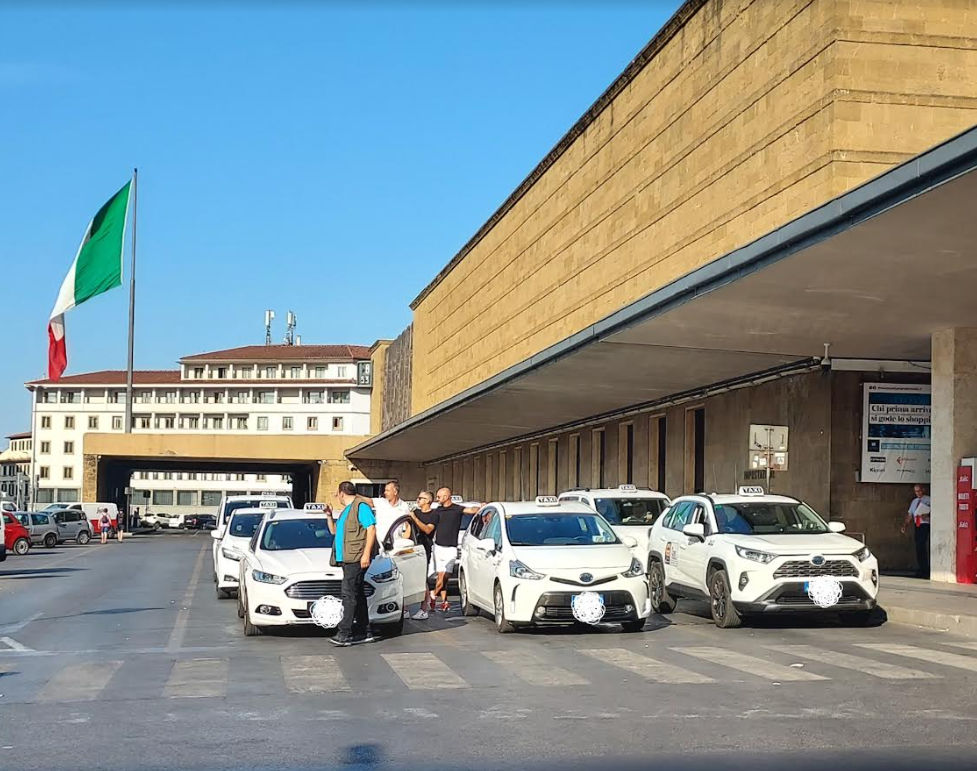
The official taxi rank at Florence Airport sits directly outside the arrivals terminal, making it straightforward to find and board a licensed vehicle. The entire process from exiting baggage claim to departing in a taxi typically takes 5–10 minutes during off-peak hours.
After collecting your luggage, follow the exit signs leading from the baggage claim area. The taxi rank is immediately visible once you step outside—many travelers mistakenly search inside the terminal when the stand is outdoors.
Walk straight ahead to the clearly marked taxi waiting area with its white vehicles bearing the official Comune di Firenze taxi insignia. Ignore any unofficial drivers approaching you inside the terminal, as legitimate taxi drivers wait only at the official rank.
During busy periods, a single-file queue forms at the rank head. Wait your turn rather than approaching vehicles directly—the dispatcher or lead driver will direct you to the next available taxi.
Before placing luggage in the trunk, state your destination clearly. The driver should acknowledge the fixed €28 city-center fare or activate the meter for other destinations—if they quote a different price for the centro storico, you can refuse and take the next taxi.
Once inside, check that the meter displays the correct tariff or that the driver applies the fixed fare. Keep your belongings with you in the passenger area if you prefer, though trunk storage is standard practice.
Visitors often fall for unofficial drivers or misunderstand legitimate surcharges, leading to inflated fares or disputes. Knowing when extras are valid helps you pay the correct amount.
Accepting rides from unlicensed drivers inside the terminal
Only use the official taxi rank outside arrivals—licensed cabs display the commune shield and meter.
Refusing to pay night or holiday surcharges
These supplements are legally mandated and appear on the official tariff board at the rank.
Assuming all meter fares are fraudulent
The fixed €28 fare applies only to Florence city center; other destinations use the meter legitimately.
Not asking for a receipt before paying
Request a receipt (ricevuta) to verify the fare breakdown and have proof if you need to file a complaint.
Negotiating a lower fare with the driver
Official taxis charge regulated rates—haggling signals you're dealing with an unlicensed operator.
Everything you need to know about florence airport taxi cost
The fixed fare for a ride from the airport to the city center is 28 EUR. This standard rate applies to authorized taxis operating at the designated rank.
Yes, supplements apply to the fixed rate for night shifts and holidays. These surcharges are clearly outlined in the official taxi regulations for Florence.
Taxis are available at the designated rank directly outside the arrivals terminal. The service operates 24/7 to accommodate all flight schedules.
Official taxis at the airport do not require advance booking. You can simply proceed to the rank, as cars are consistently available for passengers arriving throughout the day.
Most taxis are equipped to accept electronic payments, including credit cards. It is recommended to confirm this with the driver before beginning your trip to the city center.
While a private transfer offers personalized service and pre-arranged pickup, the official taxi service provides a set price for the journey. Comparing these options helps travelers decide the best transport mode for their needs.
The set fare is charged per vehicle, not per passenger. This makes taxis a cost-effective solution for small groups or families traveling together to their accommodation.
The travel time to the city center is generally brief, though it can vary based on traffic conditions. Taxis follow the most direct route to reach popular landmarks in Florence.